Admin app
Optimizing tennis court and class management.
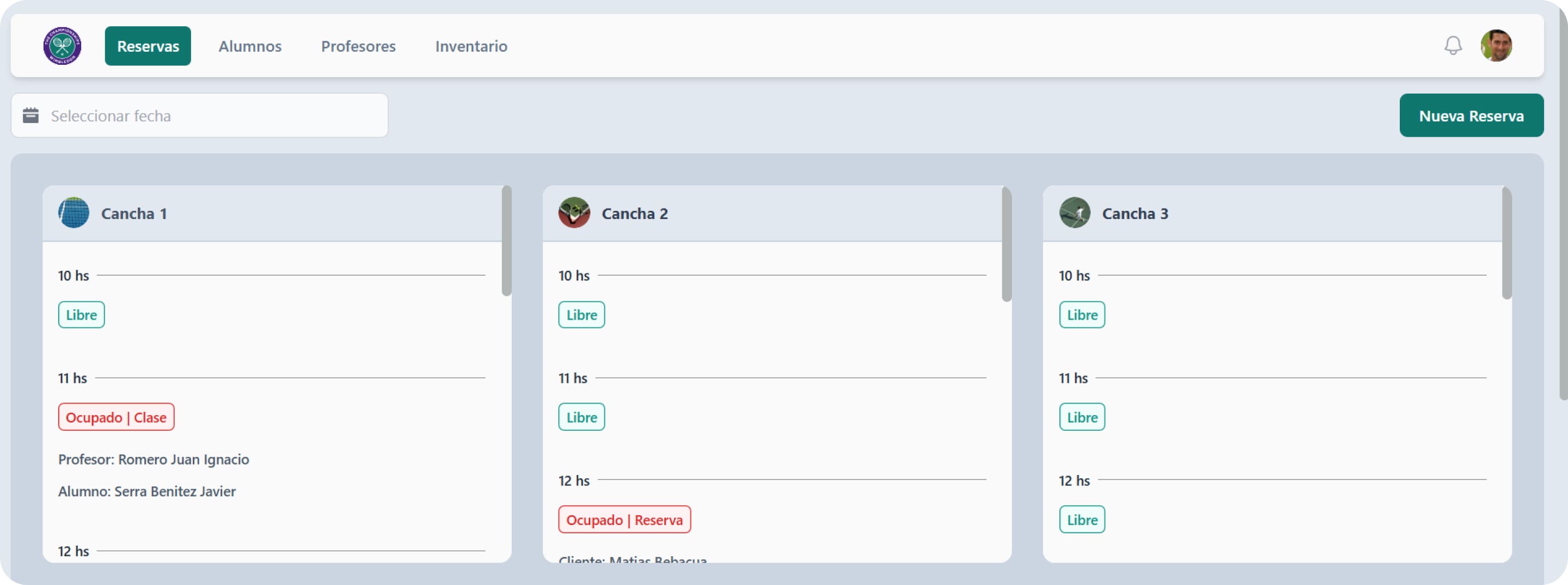
Simplifying sports club management.
Admin Tenis is a digital platform for the comprehensive management of tennis courts. Designed for small and medium-sized clubs, it allows managing reservations, classes, teachers, students, and sports inventory from any device.

Chaotic reservations and limited control.
Before Master Tenis, clubs operated with manual spreadsheets or generic applications that did not meet their specific needs. This generated overlaps, lack of control, and a poor experience for administrators and teachers.
Diverse roles, distinct needs.
The platform had to consider different types of users: administrators and teachers, each with particular flows
and priorities.
Dispersed management without sports focus.
There was no integrated way to visualize court occupancy, organize classes, or track sports supplies.
Everything was solved with isolated or manual solutions.
Poor mobile experience.
Most systems were not adapted for mobile, limiting use in different scenarios.
Diseñar un sistema unificado, adaptable y visualmente claro para gestionar la actividad deportiva en tiempo real, con foco en la experiencia desde dispositivos móviles.
Design principles.
Clear availability visualization.
Visually reference statuses and calendars.
Responsive design.
Priority to mobile use for coaches and administrators on the go.
Simplicity without sacrificing depth.
Simple interfaces for frequent tasks, without losing control over key information.
One system, multiple solutions.
We group reservations, students, teachers, and inventory into the same fluid experience.
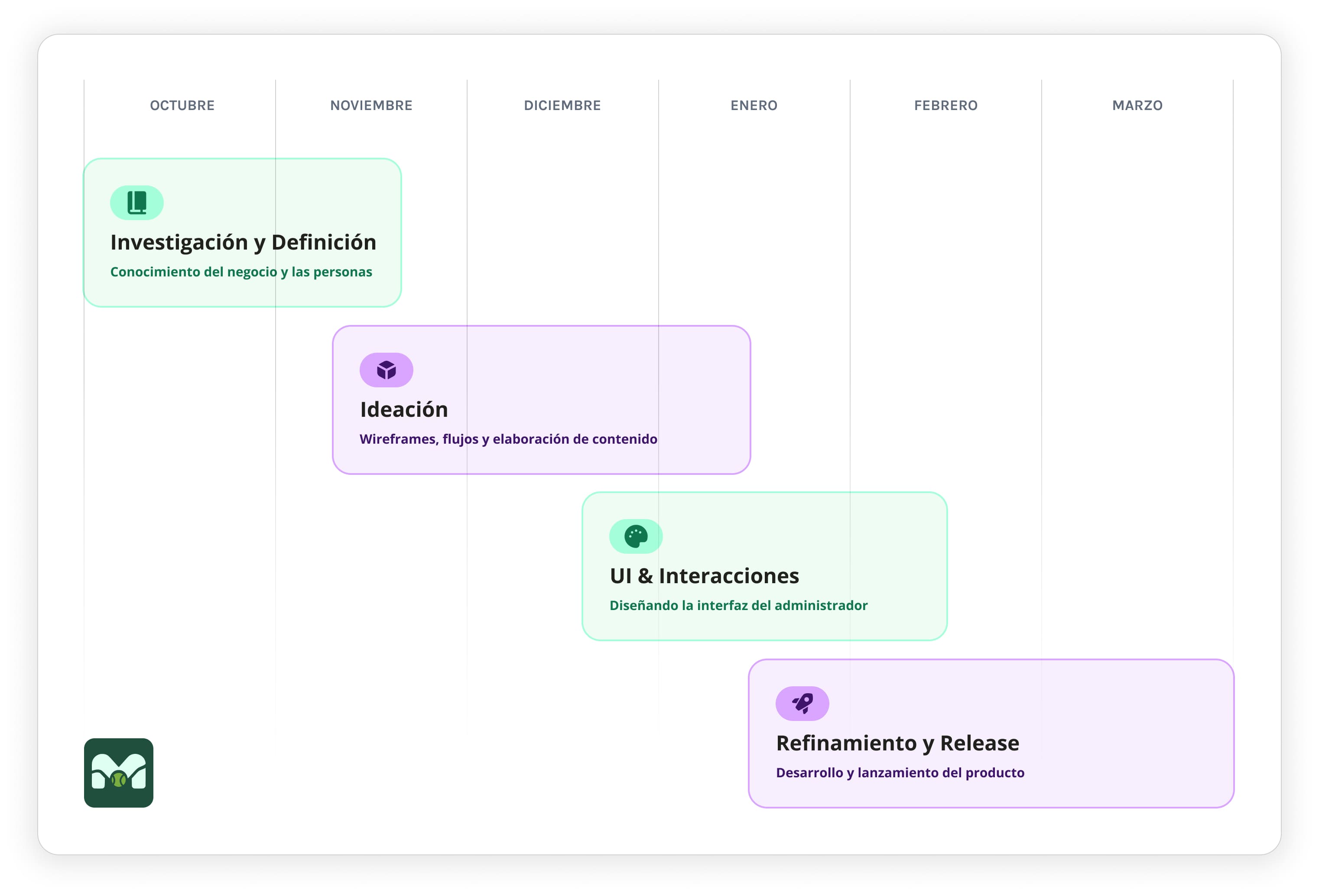
With planning, design translates into impact.
The chaos of manual reservation.
Clubs with little digitalization faced frequent errors and a fragmented view of their resource usage. The experience for users and administrators was far from potential.
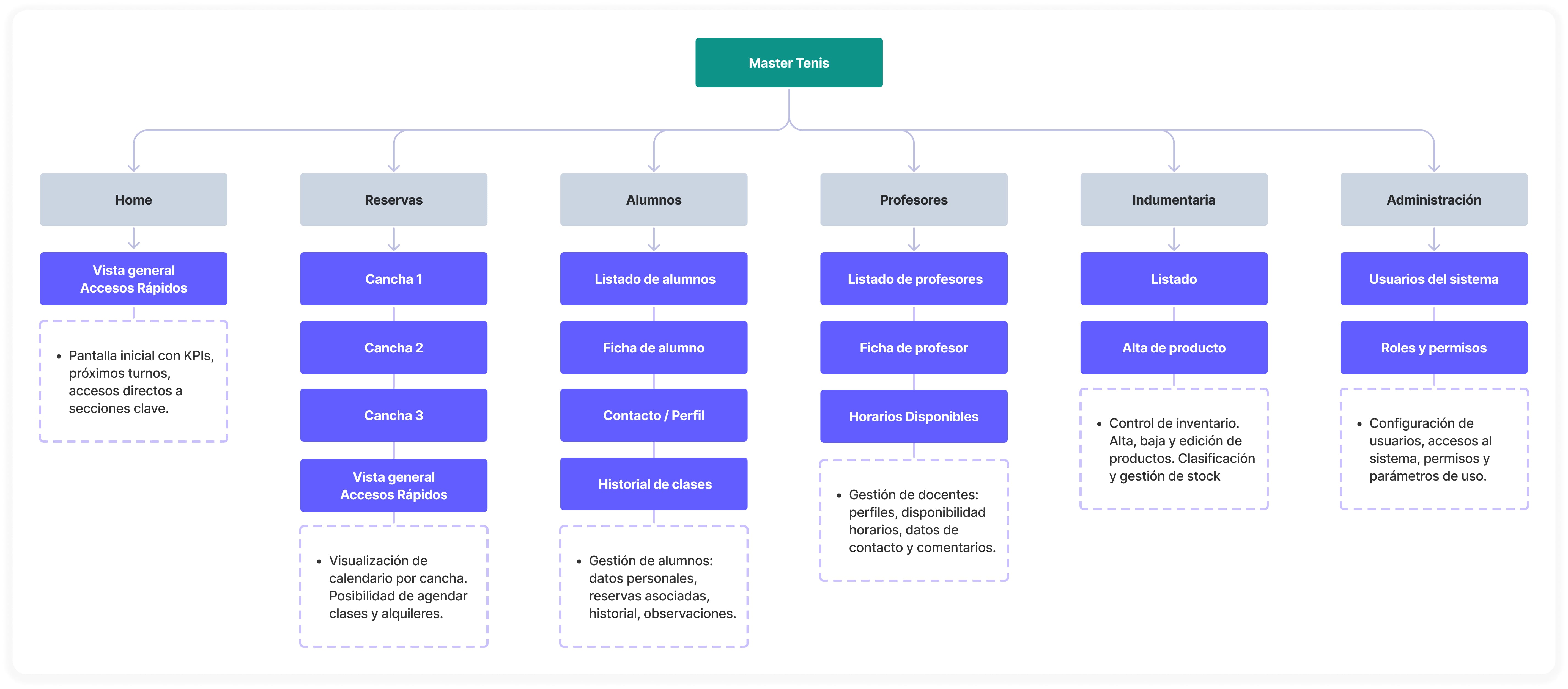
Information architecture was a key piece in project organization.
Challenges ahead.
During research and initial talks, several friction points were identified that the new platform had to resolve:
Lack of visibility in court availability.
Difficulty scheduling classes with multiple professors.
Limited control of supplies and apparel.
Complex mobile navigation.
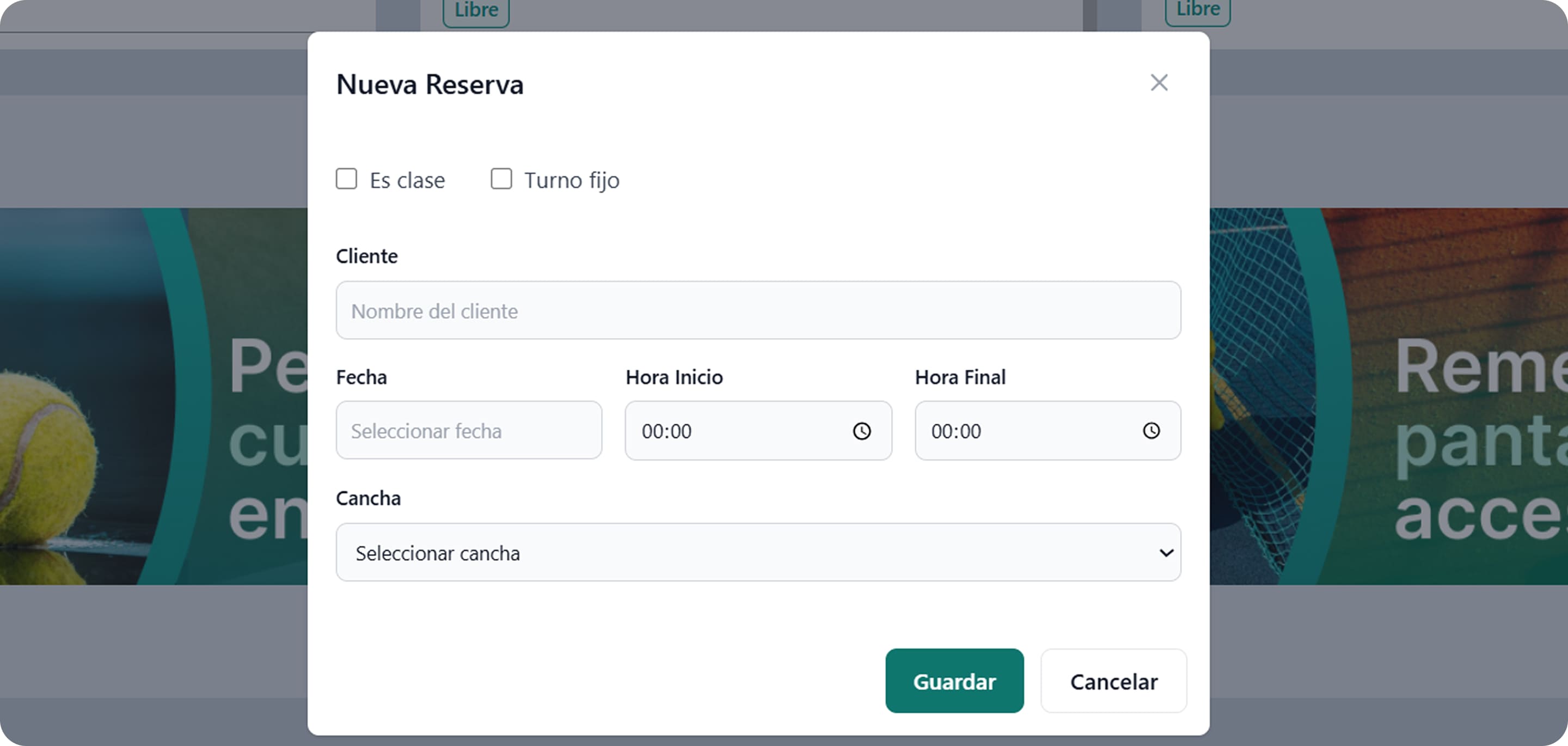
Digitization and task automation remains a constant challenge.
Designing with fundamentals.
Based on learnings, we defined solutions centered on visualization, fluidity, and control:
Calendar per court with statuses to detect availability.
Reservation system intuitive and fast, designed for mobile.
Students and teachers module with class history.
Inventory management with sports categories (balls, grips, strings, clothing).
Dark mode for outdoor use or low-light environments.
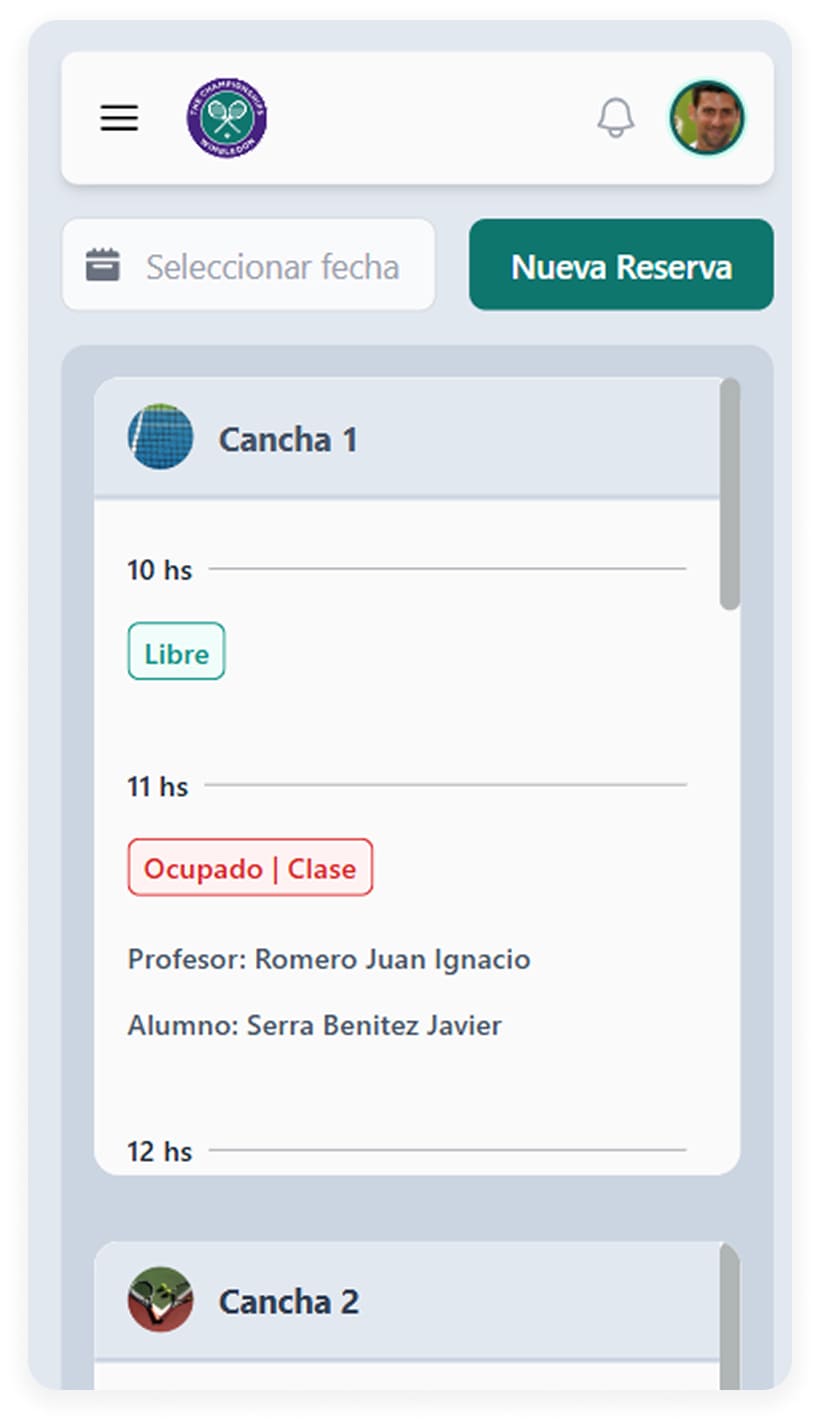
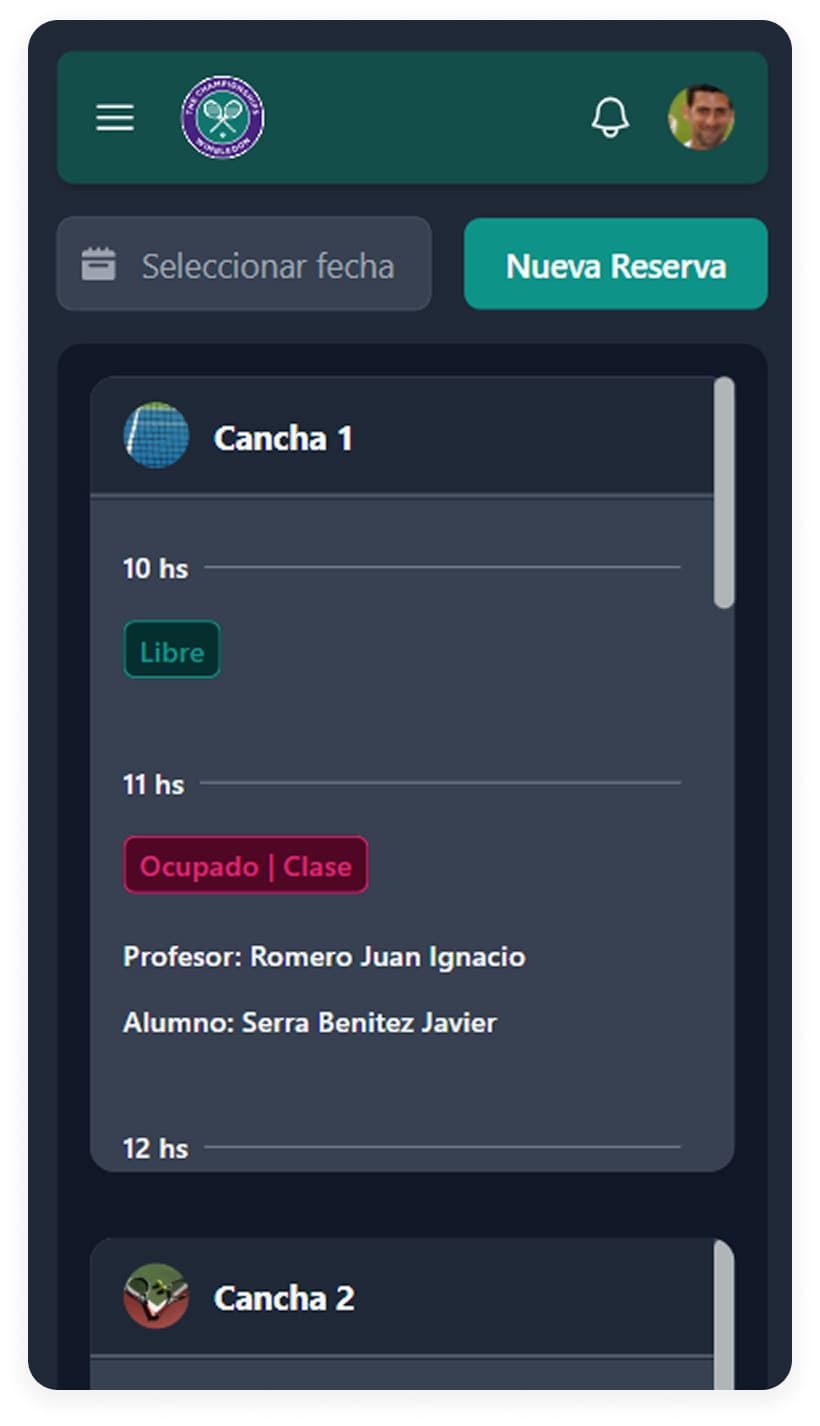
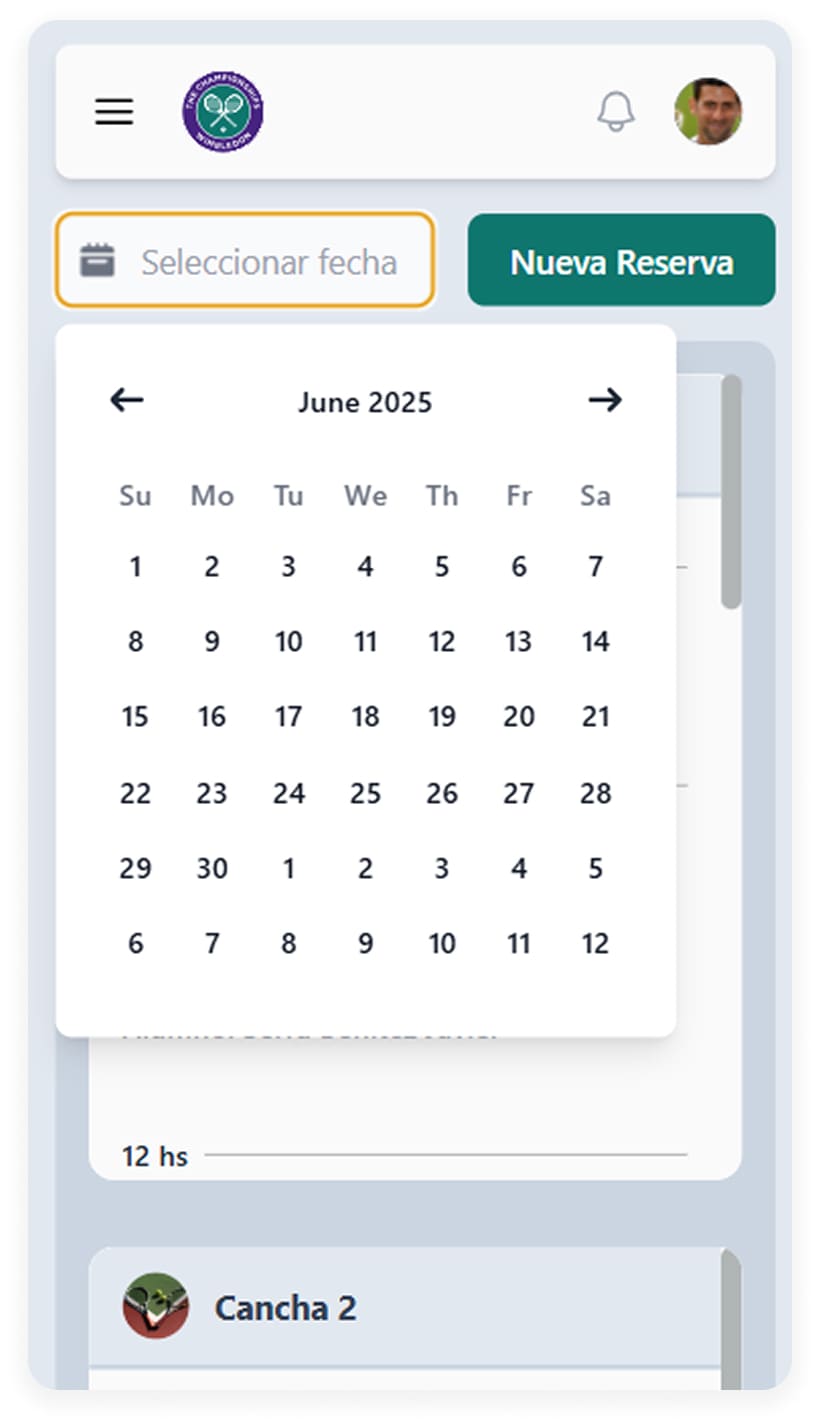
We focused on mobile design, to make the app friendly to use for people on the move.
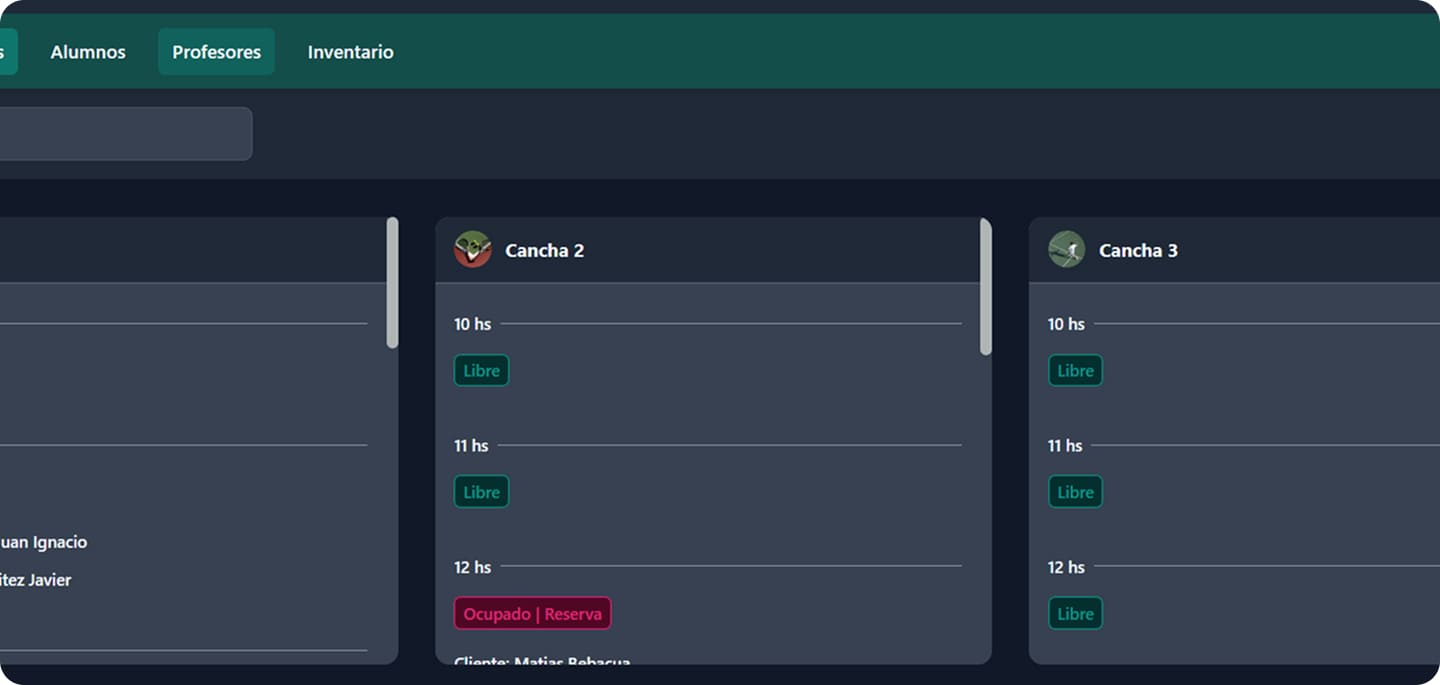
Rapid identification and court occupancy was a priority to improve communication with clients.
Usage data.
Measurable Success
40" average to register a shift, vs. 3' with the previous method.
50% reduction in customer service time by administration.
Process reflections.
Design with real context
Observing the environment was key to proposing improvements that really worked in the routine of coaches and administrators.
Less is more
Reducing elements on screen and prioritizing the essential allowed for more effective and clear navigation.
Dark mode is not just aesthetic
Users especially valued the incorporation of dark mode in low-light environments.
Final notes.
Admin Tenis demonstrated that good design can completely transform the operation of small clubs without large technological resources. Focus on essentials, mobile experience, and visual clarity were key to adoption.